
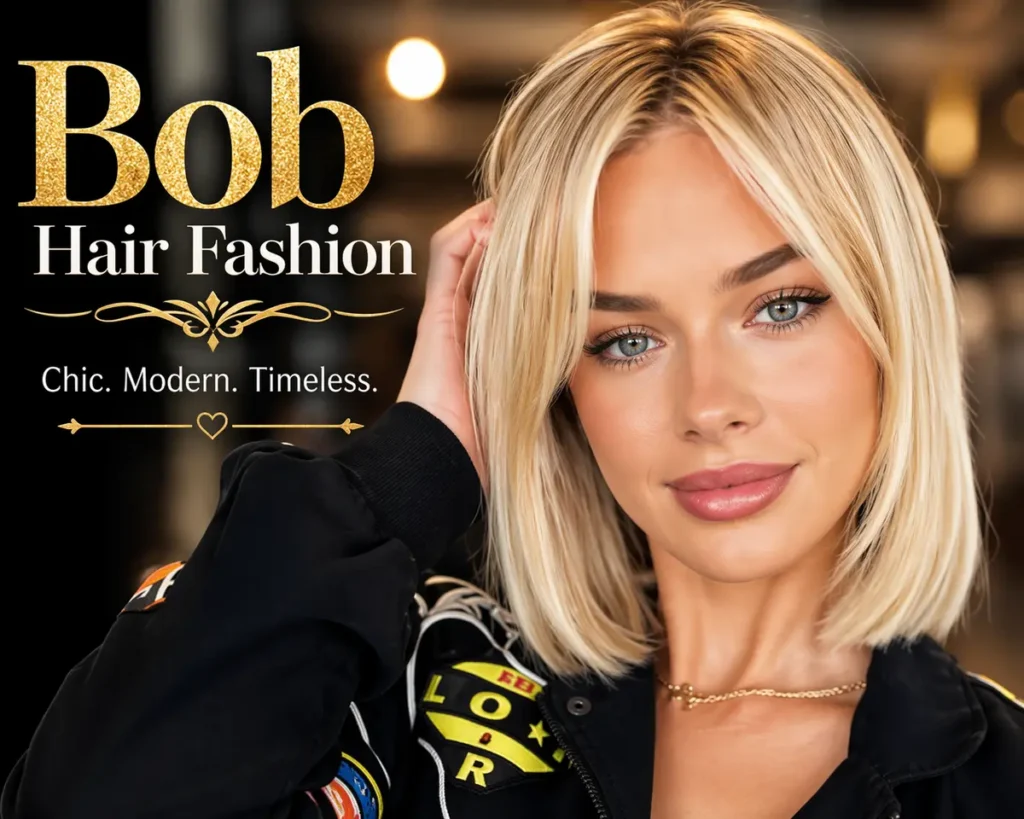
There is something almost magnetic about a great bob. You spot someone across a café, and before you even register what you are noticing, your eyes follow the clean, sharp line of their hair. Maybe it is the way it grazes the jawline just so, or the confidence in how they carry it. Whatever the reason, bob hair fashion has this uncanny ability to stop a room — and it has been doing exactly that since 1909.
I still remember the first time I chopped my hair into a bob. I sat in that salon chair, heart hammering, watching ten inches of hair fall to the floor like I was shedding a whole chapter of my life. When the stylist swiveled me around to face the mirror, I did not recognize myself — and I mean that in the best possible way. I looked sharper, more intentional. More me. If you are on the fence about making the cut, consider this your sign that the conversation between you and your reflection is worth having.
A Brief History of Bob Hair Fashion (And Why It Never Really Left)
Bob hair fashion did not just appear out of nowhere. It was a statement — and a controversial one at that. When Polish-French hairdresser Antoine de Paris gave actress Eve Lavallière her first bob in the early 1900s, the style was seen as nothing short of scandalous. Women cutting their hair short was coded as radical, political even. When the flapper era of the 1920s arrived, the bob became the unofficial uniform of a generation of women who refused to be told how to look, how to act, or how long to wear their hair.
Fast forward through the decades and bob hair fashion keeps reinventing itself without ever losing its core identity. The sleek geometric bobs of Vidal Sassoon in the 1960s. The shaggy, textured bobs of the 1990s grunge era. The blunt bobs that flooded Instagram feeds in the 2010s. The French girl bobs and curtain-bang bobs of today. Each era puts its own fingerprint on the cut, and yet the silhouette remains unmistakably, enduringly bob.
That is part of what makes this style so special — it does not age. It adapts. And right now, in 2024, bob hair fashion is having what fashion editors are calling its most exciting moment yet.
Also Read: 7 Comfortable Baddie Bridal Heels for All-Day Wear.
Why Bob Hair Fashion Works for Almost Everyone
Here is the honest truth that most style guides skip: bob cuts are not a one-size-fits-all magic solution. What they are is one of the most customizable haircuts in existence. The reason bob hair fashion flatters such a wide range of face shapes, hair textures, and personal aesthetics is that it is less a single style and more a family of styles held together by one defining characteristic — length that sits somewhere between the ears and the collarbone.
Face Shape and the Bob: What Actually Matters
You have probably heard the old rules: round faces should go asymmetrical, square faces need softness, oval faces can pull off anything. There is a grain of truth in this, but experienced stylists will tell you the real determining factor is less about face shape and more about proportion. Where the bob ends on your neck, how much volume it carries at the crown, whether the ends are blunt or wispy — these decisions create proportion, and proportion is what makes or breaks any cut.
For example, a chin-length bob with a slight outward curve at the ends adds width at the jaw, which works beautifully if you have a longer, narrower face. That same cut on a round face might feel like it is widening an already wide area — but lower the length by an inch and add a slight inward tuck, and suddenly it is sculpting rather than adding width. It is that precise.
Hair Texture and the Bob: Owning What You Have
Straight hair and the bob have always been best friends, largely because blunt cuts show off smooth texture with cinematic precision. But curly and wavy hair bobs deserve far more love than they get in mainstream bob hair fashion conversations. A curly bob — sometimes called a “curb” — shrinks slightly when dry, which means your stylist should cut it longer than you think you want it. When it springs up, the result is a voluminous, bouncy shape that has a completely different energy than its straight-haired counterpart. Not better or worse. Just gloriously its own thing.
Wavy hair, meanwhile, tends to behave beautifully in a shaggy or layered bob. The waves create natural movement and texture, so you do not need to do much beyond air drying with a little product and letting the hair do its thing. For anyone who has spent years fighting their natural wave pattern, a well-cut bob might be the permission slip you needed to put down the flat iron.
Also Read: Baddie Beauty Routines for Calm, Clear, and Healthy Skin.
The Bob Styles Dominating Right Now
Bob hair fashion in 2024 is not a monolith. Here is a look at the cuts that are showing up everywhere from high-end salons to TikTok tutorials, and what makes each one worth considering.
The Blunt Bob
This is the one that probably comes to mind first when you hear “bob.” Blunt, clean, no-fuss ends cut in a straight line — it is architectural and deliberate. The blunt bob reads as polished and confident without trying too hard, which is exactly the kind of style energy people are drawn to right now. It works best on straight to slightly wavy hair, and it photographs exceptionally well.
The Textured or Shaggy Bob
On the opposite end of the spectrum sits the shaggy bob, loaded with layers, curtain bangs optional. This is bob hair fashion for people who want the length without the rigidity — there is an effortless, slightly undone quality to it that feels very current. Think of it as the bob that looks like you rolled out of bed in Paris and still somehow look incredible. Lived-in, cool, and surprisingly low maintenance once you find the right products.
The Asymmetrical Bob
One side longer than the other — simple concept, striking result. The asymmetrical bob has been circling back into bob hair fashion conversations recently because it adds an artistic, almost architectural quality to the cut. It is a bolder move, and it tends to suit people who like their style to communicate something before they even open their mouth.
The French Bob
Shorter than a traditional bob, often with bangs, sitting around the cheekbones or just below the jaw — the French bob is the one your favorite European actress wears in every film. It takes a little more confidence to pull off because of its brevity, but when it works, it works. This is arguably the most fashion-forward entry in current bob hair fashion, and stylists report it is one of the most-requested cuts in salons right now.
The Curly Bob
As mentioned above, the curly bob deserves its own category entirely. With natural texture doing all the heavy lifting, this version of bob hair fashion feels playful, full of life, and completely unique to the person wearing it — because no two curl patterns are the same. The rise of the curly bob in recent years also signals something broader happening in beauty culture: a genuine celebration of natural texture rather than a constant battle against it.
The Lob (Long Bob)
The lob is the gateway bob. If you are not quite ready to go full chin-length, the long bob — ending anywhere between the collarbone and the shoulders — gives you the clean, intentional feeling of a classic bob without the dramatic length change. It is incredibly versatile and arguably the easiest bob to grow out if you change your mind, which makes it a safe first step into bob hair fashion for the commitment-averse.
Also Read: Baddie Brand Picks That Make Shopping Easy and Smart.
How to Talk to Your Stylist About the Bob You Actually Want
One of the most common frustrations people share about haircuts is walking out with something that does not match what they had in their head. With bob hair fashion, the vocabulary matters a lot because the range is so wide.
Before your appointment, spend some time saving reference photos — not just one, but three to five — that capture different angles and textures. When you sit down with your stylist, lead with what you feel about your current hair before describing the cut you want. Telling a stylist “I feel like my hair is weighing me down and I want something that feels lighter and more deliberate” gives them creative context that “I want a bob” simply does not.
Ask your stylist specifically about the nape — the back of the neck. Is it going to be clean-cut and close? Left a little longer? Tapered or blunt? The nape is where many bobs succeed or fall apart, and most clients never think to ask about it until they get home and realize something feels off.
Also, be honest about your styling routine. If you air dry every day and spend about three minutes on your hair, say so. The most stunning bob on a runway model may require daily blowouts and a round brush to look the way it does in photos. A great stylist will factor your real life into the cut they recommend — and if they do not ask, you should bring it up yourself.
Maintaining Your Bob: What Nobody Warns You About
Here is something the glossy magazine photos never quite communicate: bobs require more frequent trims than longer hair. Because the shape of the cut is so visible and intentional, the moment it starts to grow out, you notice. A blunt bob especially will start to look uneven or shapeless within six to eight weeks if it is not touched up. Budget for a trim every six to eight weeks if you want your bob hair fashion moment to stay in its prime.
The good news is that between cuts, styling a bob is often far simpler than maintaining long hair. A little texturizing spray or a small amount of smoothing serum, a quick pass with a round brush or a flat iron on stubborn pieces, and you are done in under fifteen minutes. The bob is, at its core, a style that rewards confidence more than effort — once you have the right cut, the hair largely takes care of itself.
For color, bobs are one of the best canvases available. The shorter length means color treatments are less expensive, less damaging in terms of volume, and more impactful visually. Rich brunette tones, cool blondes, copper and auburn — all of them pop against the clean geometry of a good bob. And if you are interested in trying something bold, a bob is one of the most forgiving lengths to experiment on, since you are working with less hair overall.
Also Read: Baddie Lifestyle Habits That Build Confidence Fast.
The Emotional Side of Going Bob
Let us be real about something: haircuts carry weight. For many people, cutting their hair into a bob is not just a style decision. It marks something — a breakup, a fresh start, a promotion, a moment of feeling like the old version of yourself just does not fit anymore. Bob hair fashion has this uncanny cultural history of being chosen at turning points.
That is not a trivial thing. When you walk into a salon asking for a bob, you might be bringing more than a reference photo with you. You might be bringing a quiet desire to look in the mirror and see someone who feels ready for whatever is next. And honestly? There are worse ways to mark a new chapter.
If that is where you are right now — somewhere between who you were and who you are becoming — the bob might be waiting for you. Not because hair changes everything, but because sometimes, a small, deliberate act of choosing how you want to show up is exactly the nudge a new season needs.
Final Thoughts on Bob Hair Fashion
What makes bob hair fashion endure — across centuries, across cultures, across every wave of style that rises and falls — is that it sits at the intersection of simplicity and intention. It is not trying to be everything. It is very specifically, confidently itself. And in a world of noise and excess, there is something genuinely compelling about that.
Whether you go blunt and sleek, shaggy and effortless, short and French, or long and barely-there, the bob will meet you where you are. It asks only one thing in return: that you wear it like you mean it.
And if you are sitting there reading this and wondering whether you could pull off a bob — you can. The only question left is which one is yours.
For more useful articles, visit my website: BBaddieHub.com.